
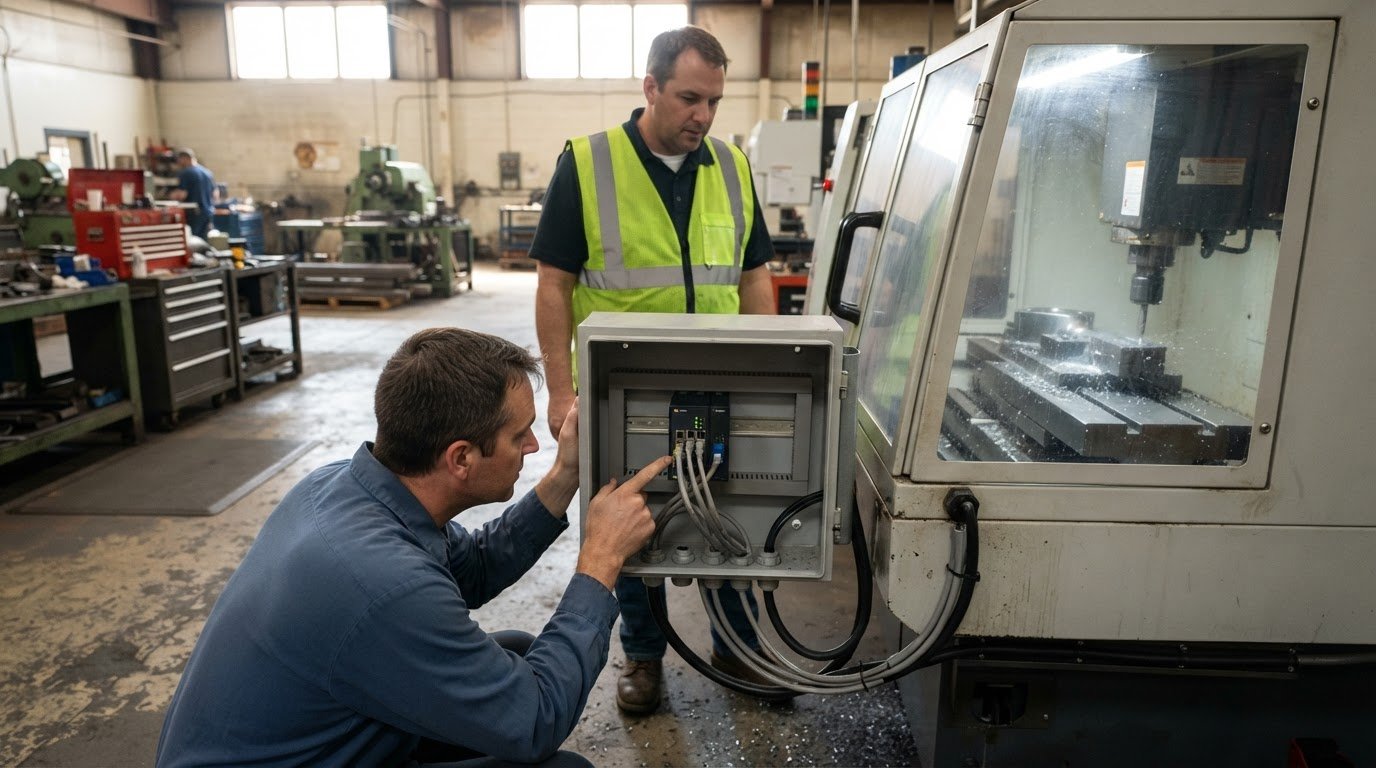
A directory lists 131 companies for IT services in Montevideo, Minnesota, but the count alone won’t tell you which can support a manufacturing operation. If you’re assessing manufacturing IT solutions in Montevideo, focus on whether technology planning addresses production needs, network security, data protection and day-to-day reliability.
Choosing IT support is a business decision, not just a technical one. Manufacturers need to understand how systems affect operations, where vulnerabilities could interrupt work, and which priorities deserve attention first.
This guide explains what manufacturing IT services can include, how IT strategy consulting can inform business decisions, and what to consider when assessing support. It also covers how managed IT, cybersecurity, network security, and data backup fit into a practical plan, helping you identify your operation’s needs and decide what to do next.
Key Takeaways
- Use the provider landscape as a starting point, then narrow your search to support that fits manufacturing operations.
- Assess how IT planning can align technology investments with production priorities, security needs and business goals.
- Separate Montevideo, Minnesota from Montevideo, Uruguay to keep location-specific provider information relevant.
- Identify when managed IT, cybersecurity or network security can help protect systems and support dependable operations.
IT services providers in Montevideo
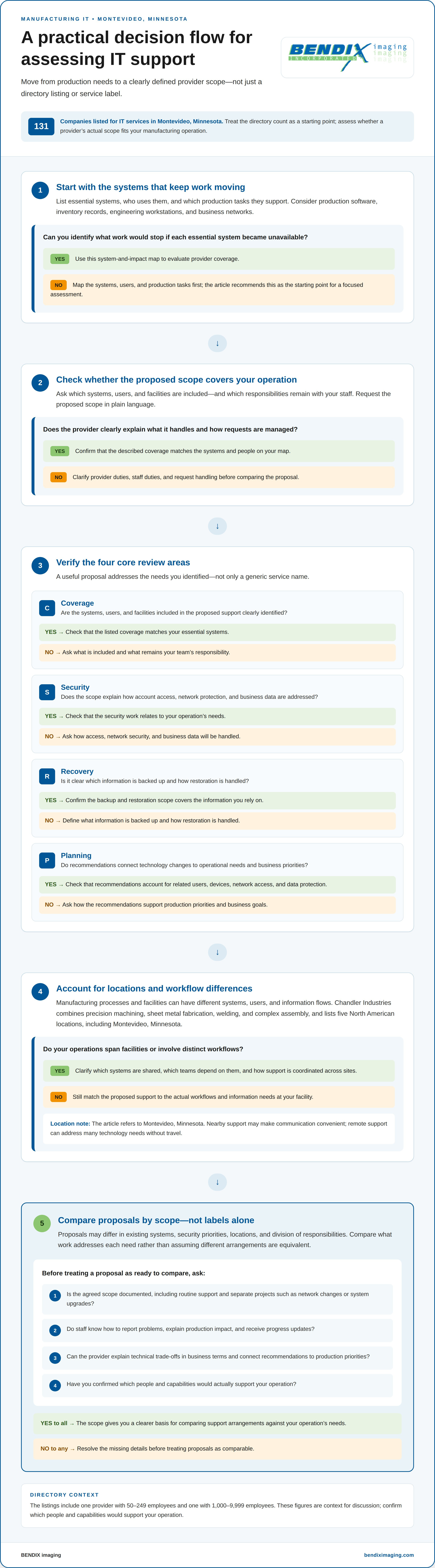
A directory lists 131 companies for IT services in Montevideo, Minnesota. That number offers a starting point, not a ready-made shortlist for manufacturers. Your operation may depend on production software, inventory records, engineering workstations, and business networks. Begin by identifying which systems support production and what work would stop if each system became unavailable. That map helps turn a broad directory search into a focused assessment.
Match provider responsibilities to the systems you identified. A manufacturer using inventory software, shared files, and connected workstations needs clear coverage for devices, user access, backups, and network support. Ask for the proposed scope in plain language: which tasks the provider handles, which remain with your staff, and how requests are managed. Clear boundaries help prevent essential systems from falling between responsibilities.
Manufacturing processes shape IT priorities. Chandler Industries combines precision machining, sheet metal fabrication, welding, and complex assembly, illustrating how workflows influence the systems and handoffs that support production. A manufacturer coordinating assembly work, for example, may rely on different applications and data flows than one focused on fabrication. Manufacturing IT solutions in Montevideo should reflect each operation’s actual workflows, not assume every plant has the same needs.
Assess fit by listing essential systems, who uses them, and which production tasks they support. Then ask how the proposed work addresses those needs. A useful recommendation connects technology to a business outcome, such as maintaining access to scheduling information or protecting production records. Another manufacturer might prioritize reliable communication between office staff and production teams.
Keep these review points visible during provider discussions:
- Coverage: Identify the systems, users, and facilities included in the proposed support.
- Security: Clarify how account access, network protection, and business data are addressed.
- Recovery: Define which information is backed up and how restoration is handled.
- Planning: Connect technology recommendations to operational changes and business priorities.
Document the agreed scope before work begins. Separate routine account support from projects such as network changes or system upgrades. Define how staff report problems, what details explain the production impact, and how progress is communicated. A delayed production application, for example, may need different prioritization from a routine workstation setup. Clear procedures help managers and technical teams coordinate decisions.
Consider location alongside support arrangements. A nearby provider can make communication convenient, while remote support can address many technology needs without travel. Manufacturers with multiple facilities should understand how systems and support responsibilities are coordinated across sites. Chandler Industries lists five North American locations, including Montevideo, Minnesota, highlighting why multi-site planning matters when operations span facilities.
Evaluate proposals by their scope, not just a generic service label or hourly rate. The work depends on existing systems, security priorities, locations, and the division of responsibilities. A defined scope clarifies which work addresses each need. Compare proposals on that basis instead of treating different arrangements as equivalent.
Look for a partner who can explain technical trade-offs in business terms. A planned software change, for example, may affect users, devices, network access, and data protection. Providers such as Distemicha focus on comprehensive IT solutions tailored to the specific operational needs of businesses, ensuring technology actively supports daily operations. Manufacturing IT solutions in Montevideo are most useful when recommendations account for these dependencies and connect them to production priorities. This gives decision-makers a clearer basis for setting priorities and planning changes.
Provider size is another point to verify when comparing options. The listings include one provider with 50 - 249 employees and one with 1,000 - 9,999 employees. Treat those figures as context for your discussion, then confirm which people and capabilities would actually support your operation.
Montevideo uruguay
Here, Montevideo means Montevideo, Minnesota. Its manufacturing context is more useful than a directory count when assessing technology needs. Manufacturing operations depend on connected systems, access to business information, and clear support responsibilities. Start by mapping the systems that move work from planning through production and delivery. This gives your IT planning a practical local focus.
Chandler Industries offers a local example of varied manufacturing activity, combining precision machining, sheet metal fabrication, welding, and complex assembly. These processes can involve distinct workflows and information needs. Assembly teams, for instance, may need timely access to current work instructions, while fabrication operations may depend on coordination between production planning and equipment schedules. A technology plan should reflect how information moves through the facility.
Chandler Industries lists five North American locations, including Montevideo, Minnesota. This makes coordination across facilities a useful consideration for manufacturers with multiple sites. Locations may have different users, equipment, and operational priorities. A clear plan documents which systems are shared, which teams rely on them, and how decisions at one site affect work elsewhere.
Build this picture before planning upgrades or support arrangements. Identify the systems used for production planning, inventory, communication, and business records. Note who depends on each system and which tasks require access. If office staff and production teams share scheduling information, for example, account for both groups’ access needs and how interruptions will be handled.
Use these prompts to make the assessment specific to your facility:
- Production flow: Map how information passes between planning, production, and administration.
- System ownership: Identify who manages each application, device, and network responsibility.
- Access needs: Record which teams need shared information to complete their work.
- Change planning: Connect proposed technology changes to operational priorities and timing.
Organize technology work around its operational impact. A problem affecting production scheduling may need different prioritization from an individual account issue. Define how staff report disruptions, what details explain their effect, and who communicates updates. A consistent process helps managers make informed decisions without relying on scattered messages or assumptions.
For a manufacturer with multiple sites, document how systems and responsibilities connect across locations. A change to shared records, for example, may affect teams at separate facilities. Clear ownership identifies who should participate in planning and who needs to understand the change. It also helps decision-makers see dependencies before approving upgrades or adjusting support arrangements. When operations rely on advanced data platforms and enterprise systems, engaging an experienced IT consultancy like Kagool can help align complex multi-facility technology architectures.
Keep the plan useful by linking each technology priority to a business need. If a proposed change supports production visibility, specify which teams need that information and how they use it. If the priority is protecting business records, define the information involved and responsibilities for access and recovery. This turns technology planning into decisions grounded in the work happening in Montevideo.
When you’re ready to turn operational needs into a focused technology plan, these manufacturing IT planning considerations can help frame the next discussion. Keep production workflows, system responsibilities, and facility coordination at the center of that planning.
Specify who receives reports, assesses operational effects, and updates affected staff. Keep the escalation path clear, with enough information to distinguish a production interruption from a routine request. After resolving an issue, record what changed and whether the response process needs adjustment. This helps managers review recurring problems and decide which improvements need attention. For facilities connected to other locations, include the people coordinating shared systems and explain how local teams can raise concerns.
Directory figures can provide context, but the Uruguay listings should not be read as a measure of technology demand in Montevideo, Minnesota. Montevideo accounted for 88.1% of the Uruguay company matches by largest-city concentration, and it accounted for 84.1% of the manufacturing IT services companies in the Uruguay list. The same listings show 74 company records for Montevideo, while Maldonado and Pocitos have two each among Uruguay manufacturing IT services listings. RevenueBase reported 36 matched Uruguay companies in the 11-50 employee band. These figures describe the Uruguay dataset, not the needs of a Minnesota manufacturing operation. For local planning, use the facility’s own process map, system responsibilities, and operational priorities to decide where support and investment will matter most.
BENDIX imaging
BENDIX imaging helps businesses align IT decisions with operational priorities through Managed IT Services and technology support. If your manufacturing operation needs clearer direction on system oversight, network protection, or security planning, its Cyber Security and Network Security services can support those priorities. Artificial Intelligence (AI) Consulting can also help you assess where AI may fit your business objectives.
Start with the challenge you need to address, such as coordinating technology priorities, protecting business systems, or evaluating an AI opportunity. A focused discussion can clarify which areas deserve attention and how they relate to your operation. Contact BENDIX imaging to discuss your manufacturing IT needs.
Turn Your IT Priorities Into a Practical Plan
A sound plan for manufacturing IT solutions in Montevideo starts with a clear decision: which business priorities should technology support first? Set that direction before approving changes, then connect each proposed investment to an operational need, a responsible owner, and a way to assess progress. This keeps planning focused on business outcomes rather than disconnected upgrades.
BENDIX imaging offers Managed IT Services, Cyber Security, and Artificial Intelligence (AI) Consulting for different technology and security priorities. These services can help shape a plan around your needs, whether you’re strengthening ongoing IT management, addressing cybersecurity concerns, or considering AI consulting.
Discuss your IT priorities with BENDIX imaging and take the next step toward a more deliberate technology plan. Clear priorities give your team a stronger foundation for moving forward.
Frequently Asked Questions
How many IT services for manufacturing companies are there based in Uruguay?
A directory lists 29 IT services companies in Uruguay; that figure doesn’t count providers exclusively serving manufacturers. Uruguay and Montevideo, Minnesota, are different locations, so their directory data shouldn’t be combined. For a Uruguay-based manufacturer, narrow the directory by the operational tasks involved, such as production scheduling, inventory coordination, or maintaining business records.
What IT services do Montevideo manufacturing companies need, such as cloud, networking, and cybersecurity?
The right IT service mix depends on which systems support essential production tasks. A plant using digital work orders, for example, needs current instructions available to relevant staff and clear responsibility for maintaining those records. Map core workflows, identify system dependencies, and prioritize support by operational impact. This helps define a service scope around real needs rather than unrelated technology.
What are the prices of manufacturing IT solutions in Montevideo?
The article recommends comparing the defined scope of work rather than relying on an hourly rate alone.
What are the risks of adopting manufacturing IT solutions in Uruguay, including downtime and skills shortages?
Unavailable production systems can interrupt work, while security weaknesses can put networks and business data at risk. Map essential systems, clarify support responsibilities, and define what is backed up and how restoration is handled.
{"@context":"https://schema.org","@type":"FAQPage","mainEntity":[{"@type":"Question","name":"How many IT services for manufacturing companies are there based in Uruguay?","acceptedAnswer":{"@type":"Answer","text":"A directory lists 29 IT services companies in Uruguay; that figure doesn’t count providers exclusively serving manufacturers. Uruguay and Montevideo, Minnesota, are different locations, so their directory data shouldn’t be combined. For a Uruguay-based manufacturer, narrow the directory by the operational tasks involved, such as production scheduling, inventory coordination, or maintaining business records."}},{"@type":"Question","name":"What IT services do Montevideo manufacturing companies need, such as cloud, networking, and cybersecurity?","acceptedAnswer":{"@type":"Answer","text":"The right IT service mix depends on which systems support essential production tasks. A plant using digital work orders, for example, needs current instructions available to relevant staff and clear responsibility for maintaining those records. Map core workflows, identify system dependencies, and prioritize support by operational impact. This helps define a service scope around real needs rather than unrelated technology."}},{"@type":"Question","name":"What are the prices of manufacturing IT solutions in Montevideo?","acceptedAnswer":{"@type":"Answer","text":"The article recommends comparing the defined scope of work rather than relying on an hourly rate alone."}},{"@type":"Question","name":"What are the risks of adopting manufacturing IT solutions in Uruguay, including downtime and skills shortages?","acceptedAnswer":{"@type":"Answer","text":"Unavailable production systems can interrupt work, while security weaknesses can put networks and business data at risk. Map essential systems, clarify support responsibilities, and define what is backed up and how restoration is handled."}}]}


